Avela Meds · Long-term medication routines
Medication inventory is more than a pill count.
For a long-term routine, the useful questions are often how long the current supply may last, which medication is running low, what needs to be refilled next, and how the new supply reconnects to the existing medication record.
01 · Start with remaining supply
The same number of tablets can represent very different amounts of time.
A raw stock count has limited context. Keeping the remaining quantity next to the active schedule and package information makes it easier to see which medication is actually approaching a refill point.
- Track the quantity that is currently available, not only how many boxes were purchased.
- Keep package and unit information together so box, tablet, capsule, and other units do not become ambiguous.
- When a schedule is known, estimated remaining days can be more actionable than a count alone.
02 · Turn low stock into an action
A low-stock state should lead naturally to the next step.
Noticing that medication is running low is only useful if the refill workflow stays close by. A practical flow is to identify the medication that needs attention and move it into a shopping list without rewriting its name and package details in another app.
- Review medication that is low or approaching a low-stock threshold.
- Select an existing medication from the cabinet so its name and package context stay attached.
- Confirm how many packages belong on the shopping list before checkout.
03 · Keep the shopping list executable
A medication shopping list needs more than names.
Package information, purchase quantity, and practical notes can prevent another round of checking later. A one-off item that is not already in the medication cabinet should also be addable without pretending it is part of the long-term regimen.
- Select existing medication from the cabinet.
- Add an unlisted item when it is only needed for the current shopping trip.
- Keep notes such as insurance checkout, refrigeration, or delivery requirements with the list.
04 · Refill the existing medication record
Buying a new supply should not create a second medication profile.
After a purchase, the new quantity can return to the existing inventory record while the medication plan, reminders, and history continue around the same medication. This keeps refill events separate from regimen changes.
How Avela Meds connects the workflow
Inventory → refill planning → shopping list → restock.
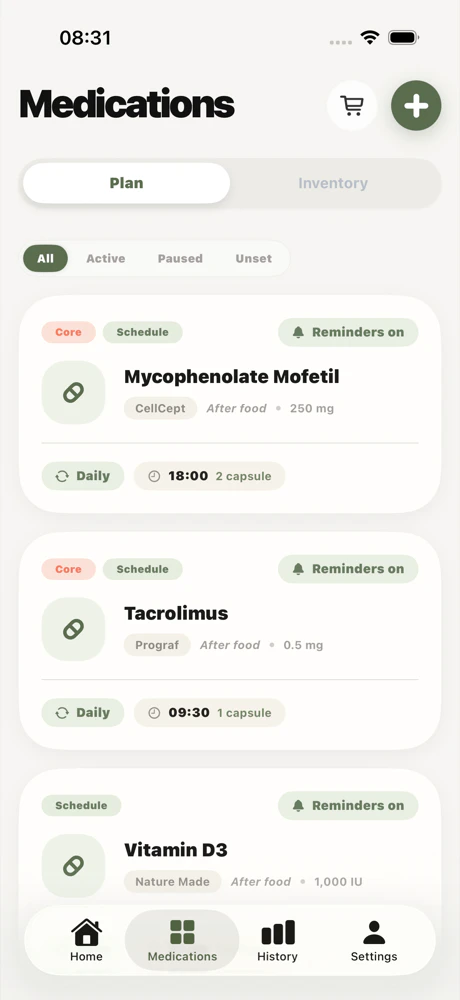
Avela Meds keeps current medication inventory and low-stock states with the medication cabinet. The refill workflow can continue into a shopping list and then back into the existing inventory record, without turning a refill into a new medication plan.
Important
This page describes inventory, list, and record-keeping workflows in a medication-management tool. It does not recommend how much medication to buy, prescribe doses, or advise starting, stopping, or changing medication. Follow your clinician and the medication label for medical decisions.